

Roof Replacement at the
Theodore Levin U.S. Courthouse
Bloom replaced 44,218 square feet of roofing on Detroit's federal courthouse with an adhered 60-mil Carlisle PVC system, working through a night tear-off, daily security screening and a crawler crane over a closed street. Bloom was later brought back for the light court roofs.
Federal courthouse, downtown Detroit
With APEEL protective film
On a crawler crane with a 170-ft boom
Return work on the lower roof sections
What the Courthouse Required
The Theodore Levin U.S. Courthouse fills a full downtown Detroit block and rises ten stories, with its upper floors built around an open interior light court. Its existing built-up roof needed to be replaced while the courts kept operating below.
The constraints
The work had to respect the building's sensitive internal operations, pass security checkpoints every time crews entered and left, move through an immaculate building without leaving a trace, and deliver a new roof that stayed clean even though the old one was coming off directly beside it.
Why that changes the plan
On an occupied federal building, the schedule is set by the building's rules, not the roofing calendar. Access, screening, lifting and cleanliness had to be planned before the first square foot came off.
How the Work Was Sequenced
Every step was planned around a working courthouse in the middle of downtown.
190 feet
Luffing jib on a 170-foot main boom, working over a closed downtown street.
- 01
Tear-off at night
The old built-up roof came off at night, keeping the dirtiest, noisiest work away from the court's working hours.
- 02
Screened in, screened out
Crews passed through the building's security checkpoints entering and leaving, every day of the project.
- 03
Lifting from a closed street
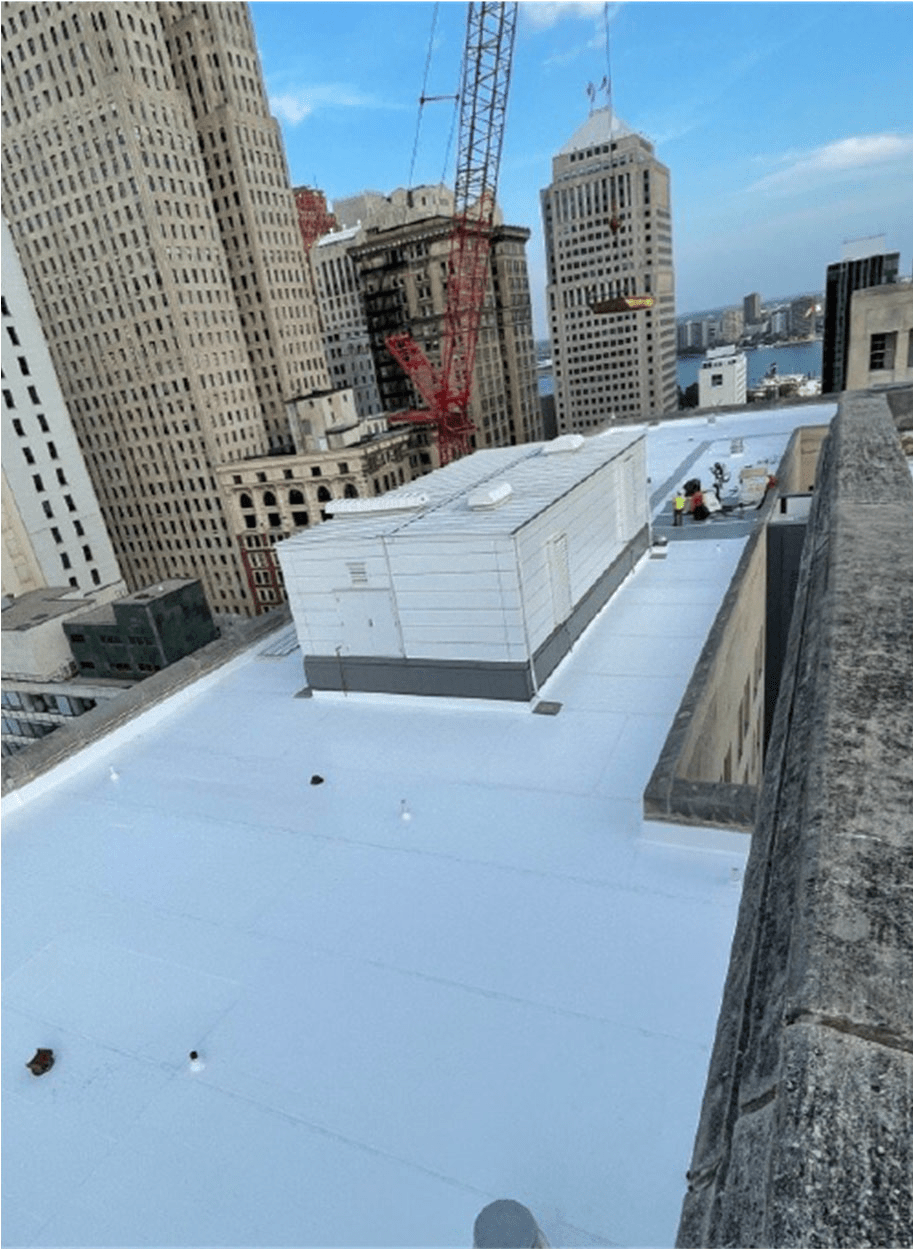
A crawler crane with a 170-foot boom and a 190-foot luffing jib worked from a closed downtown street. A luffing jib changes its angle independently of the main boom, which lets the crane reach up and over the building's edge to place loads on the roof. Materials and equipment were staged below the building.
- 04
Adhered 60-mil Carlisle PVC
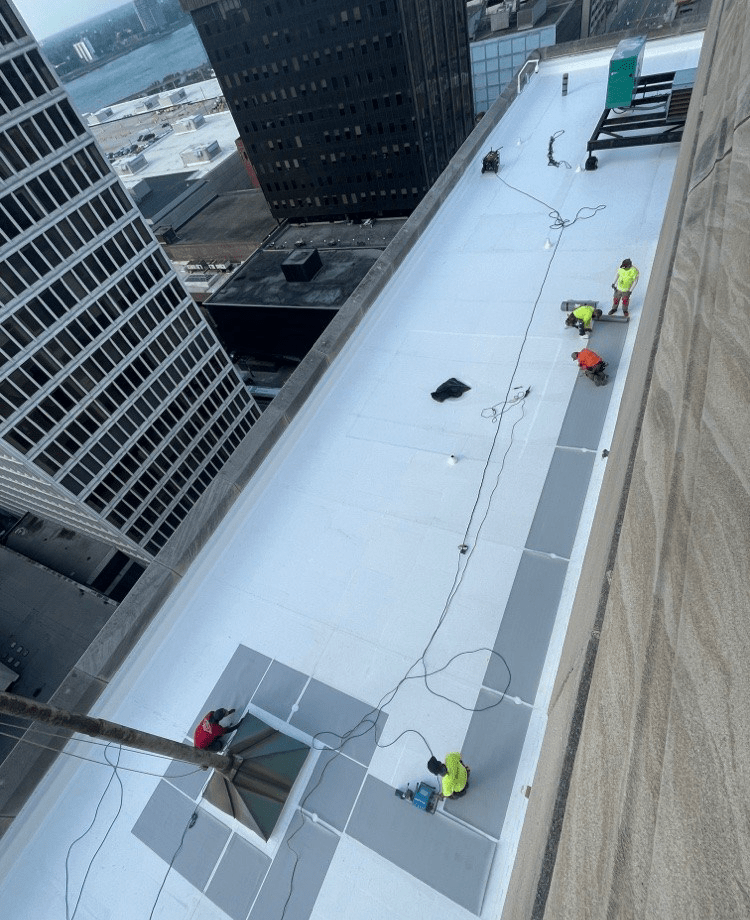
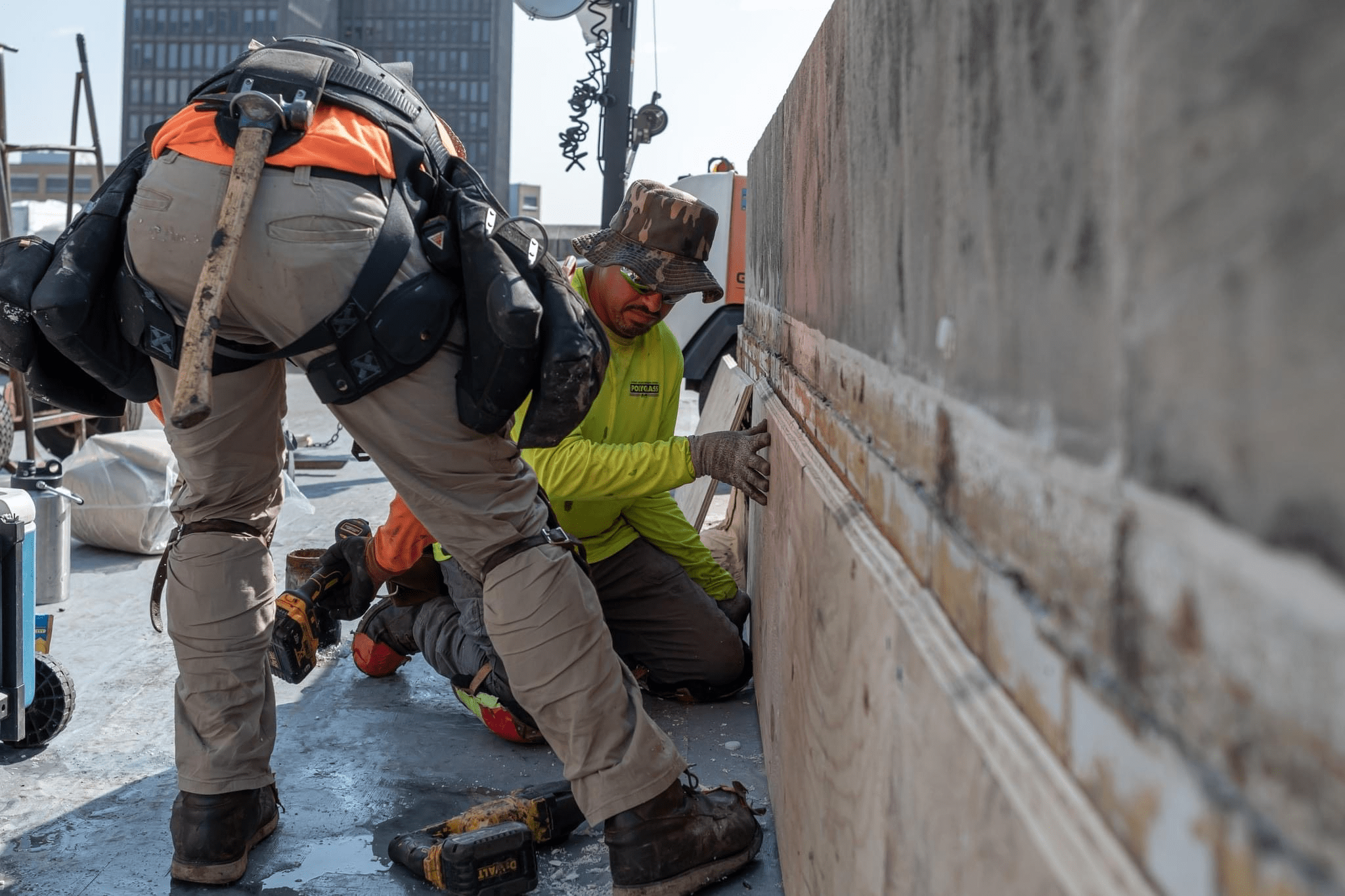
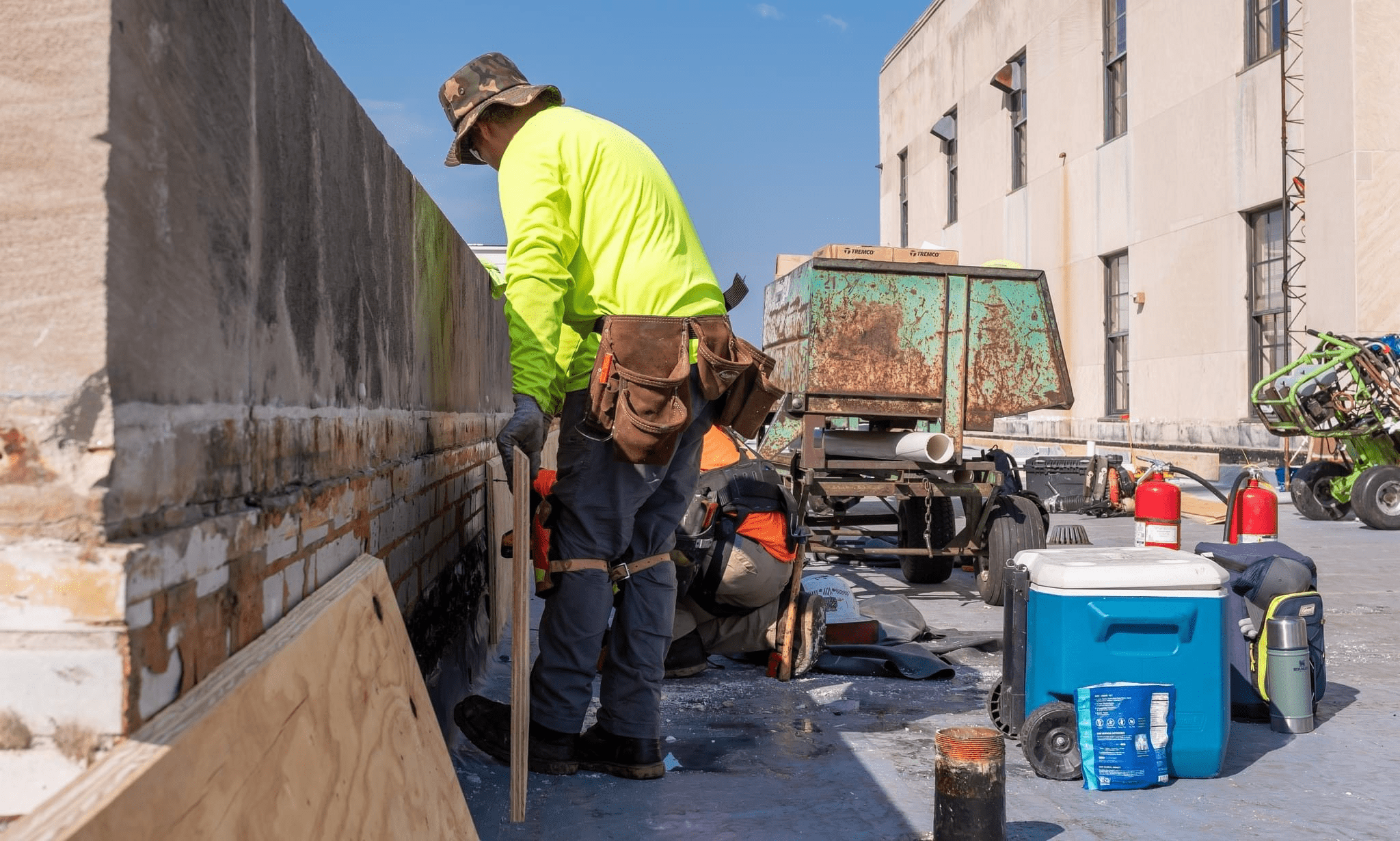
The new white PVC membrane was fully adhered across 44,218 square feet, with curbs, penetrations and roof-to-wall edges flashed into it.
- 05
Peel the film, hand over a clean roof
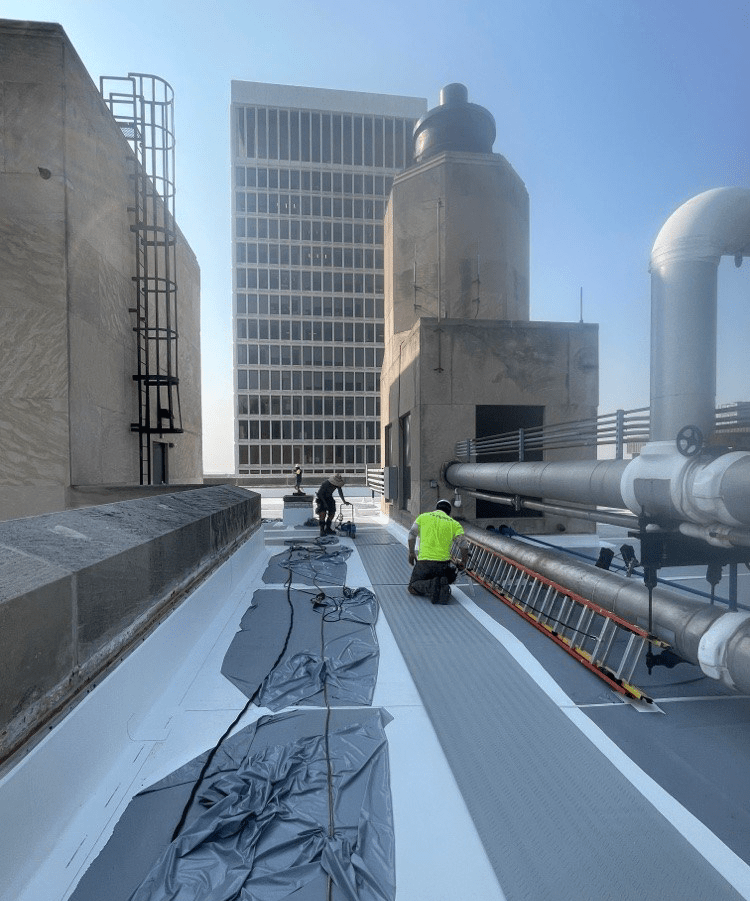
The membrane went down with APEEL protective film in place. When the work was complete, the film was pulled off to reveal a clean new roof.
A Clean White Roof Beside a Dirty Tear-Off

The problem
Tearing off an old built-up roof is dirty work, and a new white membrane shows every footprint and scuff. On this building the clean roof and the tear-off were happening side by side.
The answer: APEEL protective film
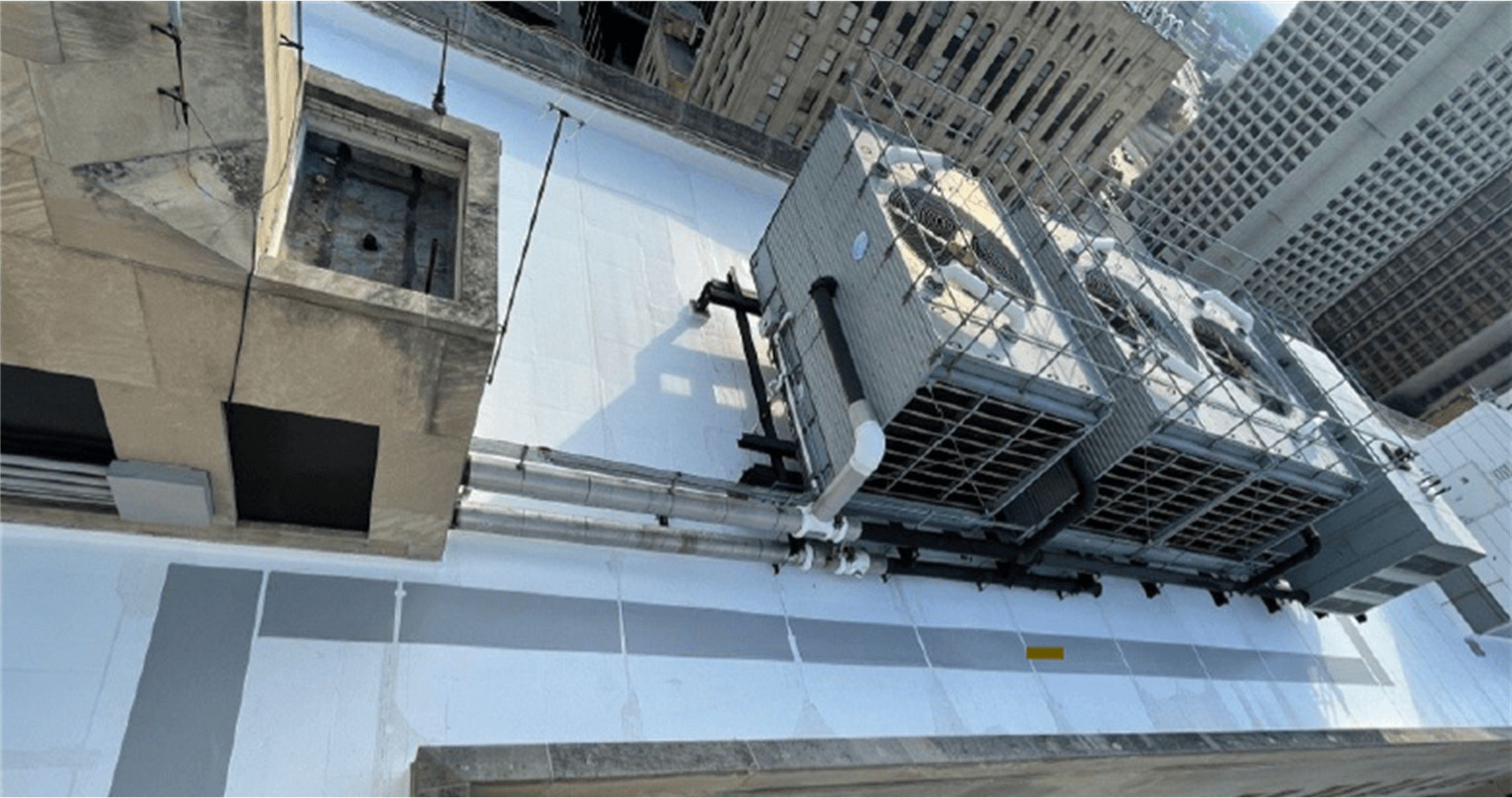
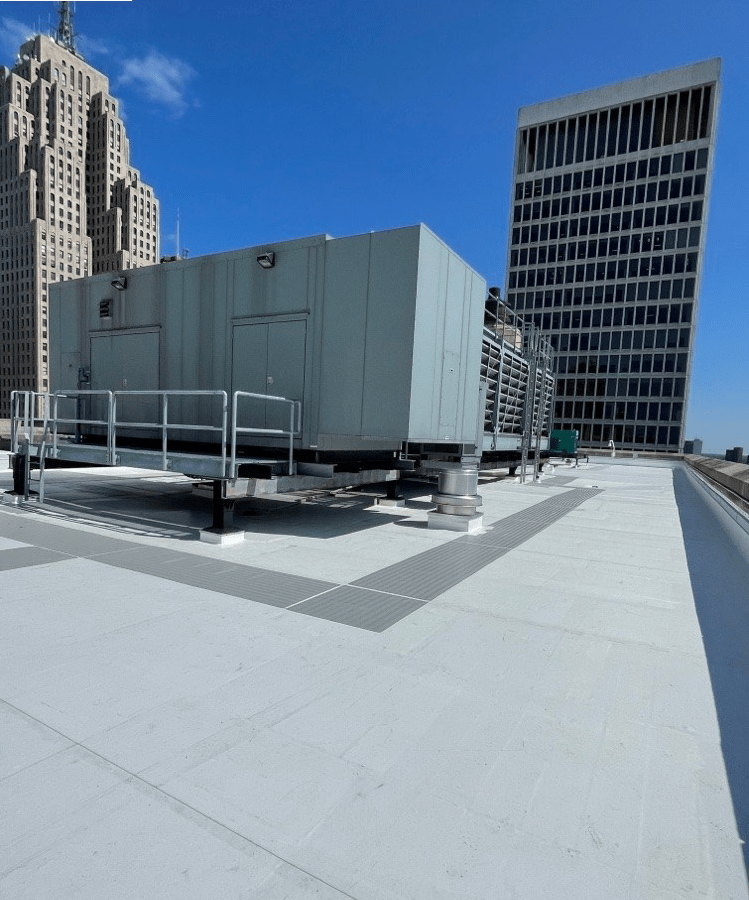
Bloom installed Carlisle 60-mil PVC with APEEL protective film, a factory-applied film that covers the membrane surface during installation and guards it from dirt and scuffs. The gray sheets in the project photos are that film. When the work is done, the film is removed and the clean membrane underneath is revealed.
Why it matters to an owner
The roof starts its service life clean and reflective, without pressure washing or chemical cleaning at the end of the job, and without dirty runoff on an immaculate public building.
Brought Back for the Light Court
The courthouse's upper floors wrap around an open interior light court. At the base of that court sit lower roof sections, surrounded on every side by the building above them.
After the main roof replacement, Bloom was brought back to roof those lower sections. On a federal building where every contractor is screened and every schedule is negotiated, being invited back is the most direct reference a building team can give.
From the Courthouse Roof


The Documented Outcome
The courthouse's built-up roof was replaced with 44,218 square feet of adhered 60-mil Carlisle PVC, and the protective film came off to reveal a clean white roof. The work was completed around the court's operations, security procedures and a downtown street closure.
Bloom was then brought back to roof the lower sections in the light court.
Related: Government roofing · Roof replacement · commercial roofing in Metro Detroit
Roofing an Occupied Public Building?
Start With the Access Plan.
Screening rules, work windows, lifting limits and what has to stay clean. Send us those along with the roof plan, and we will show you how the work can be sequenced before anyone talks membrane.